If you set your goals ridiculously high and it's a failure, you will fail above everyone else's success.

March 7, 2023 | Feast of St. Thomas Aquinas
You may say I'm a dreamer, but I'm not the only one. I hope someday you'll join us. And the world will live as one.
—John Lennon
Darkness cannot drive out darkness: only light can do that. Hate cannot drive out hate: only love can do that.
—Martin Luther King Jr.
Do not go where the path may lead, go instead where there is no path and leave a trail.
—Ralph Waldo Emerson
If you set your goals ridiculously high and it's a failure, you will fail above everyone else's success.
—James Cameron
You may say I'm a dreamer, but I'm not the only one. I hope someday you'll join us. And the world will live as one.
—John Lennon
Darkness cannot drive out darkness: only light can do that. Hate cannot drive out hate: only love can do that.
—Martin Luther King Jr.
Do not go where the path may lead, go instead where there is no path and leave a trail.
—Ralph Waldo Emerson
March 7, 2023 | Feast of St. Thomas Aquinas

The Guild State

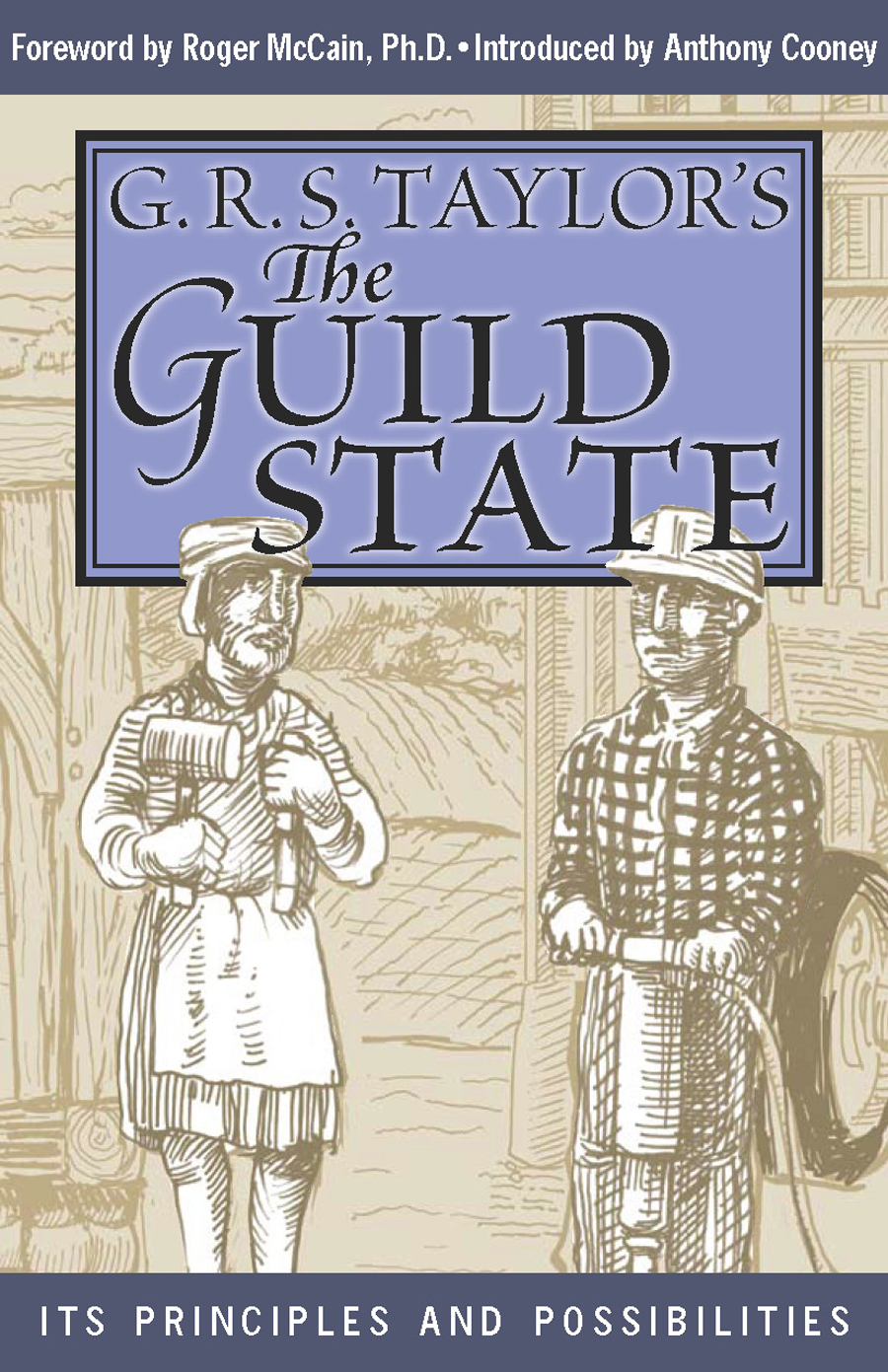
The Guild State
Its Principles and Possibilities
Author(s)
- Foreword by Roger McCain Ph.D.
- Introduction by Anthony Cooney
Buy Set(s)
- Books : The Free Press, The Guild State
- Price : $0
- Buy Now
Taylor’s Guild State is at once an inspiring vindication of the social principles of the Middle Ages as found in the guild system and a clarion call for their implementation in our society. Capturing the essence of guild organization as it existed centuries ago and as it can be profitably applied today, Taylor also highlights the key features of the guilds, which offer the modern world both a credible economic alternative to the failures of Left and Right, and an unparalleled tool for social regeneration. Taylor’s sketch is also useful in helping us to understand how a modern guild system might be applied to current societal ills such as unemployment, absentee corporate ownership, and employee disenfranchisement.
Publisher’s Preface —The Publishers
Foreword —Roger McCain, Ph.D.
Introduction —Anthony Cooney
Preface —G. R. Stirling Taylor
I. The Historical Basis of the Guild System
II. The First Principle: Organization by Function
III. The Second Principle: Self-Management
IV. The Third Principle: Decentralization and Small Units
V. Consequent Results of Main Principles
VI. Relations Between Guilds and State
VII. A Guildsman’s Philosophy of Life
editors’ annotations
No reviews available
Write a review